How To Stop A Necklace From Twisting Around: 10 Styling Checks For Chain Length And Pendant Balance
A necklace that keeps twisting, flipping or travelling around the neck can turn a polished look into a constant adjustment exercise. From chain length to pendant weight, these 10 styling checks can help jewellery sit more comfortably and stay put.

Why necklaces turn sideways and how to prevent them from doing so
A necklace can look perfectly behaved in front of the mirror and develop a personality of its own five minutes after leaving home. The clasp creeps towards the collarbone. The pendant flips backwards. A delicate chain somehow twists itself into a rope. By lunchtime, fixing it has become an unconscious ritual. It's tempting to blame the necklace, but the jewellery itself isn't always the problem. The way a necklace sits depends on several small forces working together: chain length, pendant weight, clasp size, neckline, posture and even the fabric underneath it. Something as ordinary as carrying a shoulder bag or repeatedly looking down at a phone can gradually move a pendant away from the centre.
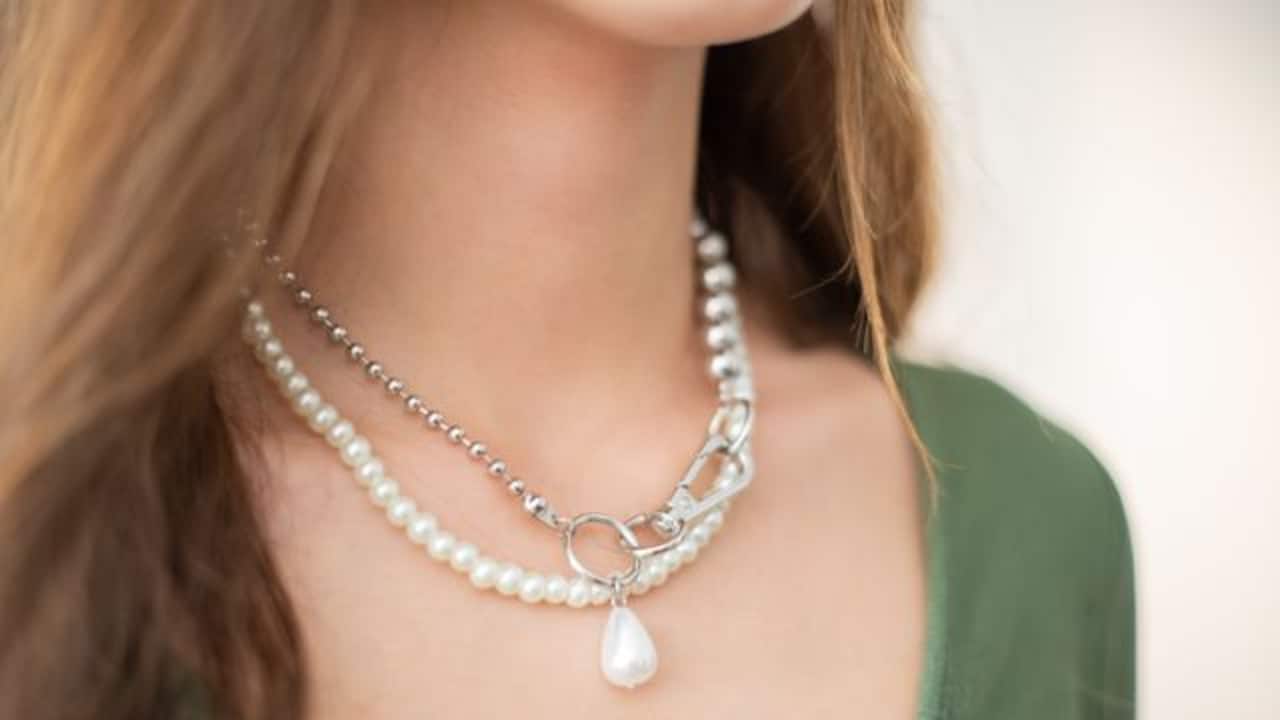
Easy tips to prevent your necklace from turning sideways
Photo Credit: Pexels
That's why simply tightening the chain or choosing a heavier pendant doesn't always solve the issue. A better approach is to look at how the necklace interacts with the body and the outfit. These 10 styling checks can help identify why a favourite piece keeps wandering and what can make it sit more naturally.
Also Read: Top 5 Anti Tarnish Jewellery That Looks As Good As New For Longer
Why Your Necklace Keeps Shifting And What To Check
1. Check Whether The Chain Is Sitting At An Awkward Length
Chain length has a surprisingly large effect on movement. A necklace that ends exactly where the neck begins to widen can struggle to stay centred because it sits on a natural slope rather than a relatively stable section of the chest.
Short chains may also rotate more easily when the neck turns. Meanwhile, a slightly longer chain often has enough room to hang vertically, allowing gravity to keep the pendant closer to the centre.
The right length also depends on the wearer. Two people can put on the same 45 cm necklace and find that it falls completely differently because neck circumference, shoulder width and upper-body proportions vary.
Before retiring a troublesome necklace, experiment with an extender. Adding even a couple of centimetres may move the pendant away from a problematic pressure point. Stand, walk around, look from side to side and sit down while testing it.
The best necklace length isn't simply the one that looks attractive while standing still. It's the one that continues to sit well once real life begins.
2. See If The Pendant Is Too Light For The Chain
A tiny pendant on a relatively substantial chain can sometimes struggle to control where the necklace sits. Without enough downward pull at the front, normal movement may gradually encourage the chain and clasp to rotate around the neck.
Think of the pendant as a small anchor. It doesn't need to feel heavy, but it should usually create enough front-facing weight to give the necklace a natural resting point.
This issue often appears with minimalist jewellery. A slim charm may look beautifully understated, yet the chain can have almost as much visual and physical weight as the pendant itself. After walking, bending or moving the shoulders, the clasp may slowly migrate towards the front.
Changing the pendant isn't always necessary. A finer chain can sometimes create better balance. Alternatively, an inconspicuous counterweight near the clasp may help stabilise certain designs.
The aim isn't to make jewellery heavier for the sake of it. It's to create enough difference between the front and back of the necklace for gravity to understand where everything belongs.
3. Make Sure The Pendant Is Not Too Heavy Either
More weight isn't automatically better. A large pendant hanging from a very fine chain can create its own set of problems.
A heavy pendant pulls firmly downwards, which sounds helpful for keeping a necklace centred. However, the chain may slide against the skin whenever the pendant swings. During brisk walking, climbing stairs or getting in and out of a car, that swinging motion can tug the entire necklace from side to side.
Large pendants may also flip when their back surface, bail or attachment point isn't balanced. A beautiful statement piece can spend half the day showing its reverse side simply because its centre of gravity sits slightly forward.
Check how the pendant hangs when held by the chain rather than when placed flat on a table. If it immediately tips forward or sideways, the problem may come from the construction rather than styling.
For everyday wear, pairing a substantial pendant with a chain that has enough structure to support it can reduce excessive swinging without making the necklace feel bulky.
4. Inspect Where The Pendant Connects To The Chain
Sometimes the chain behaves perfectly well and the pendant causes all the drama.
Look closely at the bail, loop or ring connecting the pendant to the necklace. If the opening sits at an angle, feels too narrow or cannot move freely along the chain, the pendant may repeatedly turn as the wearer moves.
Fixed pendants create another challenge. Many modern necklaces attach the chain directly to both sides of a central charm. They look beautifully neat, but there's less freedom for individual parts to adjust independently. If one side of the chain gets pulled slightly higher by clothing or movement, the entire pendant can tilt.
Try holding the necklace from its clasp and allowing it to hang naturally. The pendant should settle facing forward without needing to be manually straightened.
If it consistently turns to one side, a jeweller may be able to adjust the connecting ring or attachment. A tiny hardware change can sometimes achieve more than repeatedly repositioning the necklace throughout the day.
5. Match The Necklace Length To The Neckline
Necklines can quietly push jewellery out of position.
A pendant that lands directly on the edge of a round-neck T-shirt, kurta or blouse constantly moves between fabric and skin. Each time the wearer walks or turns, the neckline can catch the pendant and nudge the chain sideways. The necklace then starts its familiar slow journey around the neck.
V-necklines usually work best when a pendant sits clearly within the open space rather than directly against the fabric edge. With crew necks and higher collars, either go shorter so the necklace stays entirely above the neckline or longer so it falls clearly below it.
The awkward middle zone often creates the most movement.
Texture matters too. Embroidery, sequins, lace, ribbed knits and raised prints give chains more surfaces to catch against. Smooth fabrics generally allow necklaces to fall more naturally.
When a necklace behaves beautifully with one outfit but refuses to cooperate with another, don't immediately blame the jewellery. The neckline may be steering it.
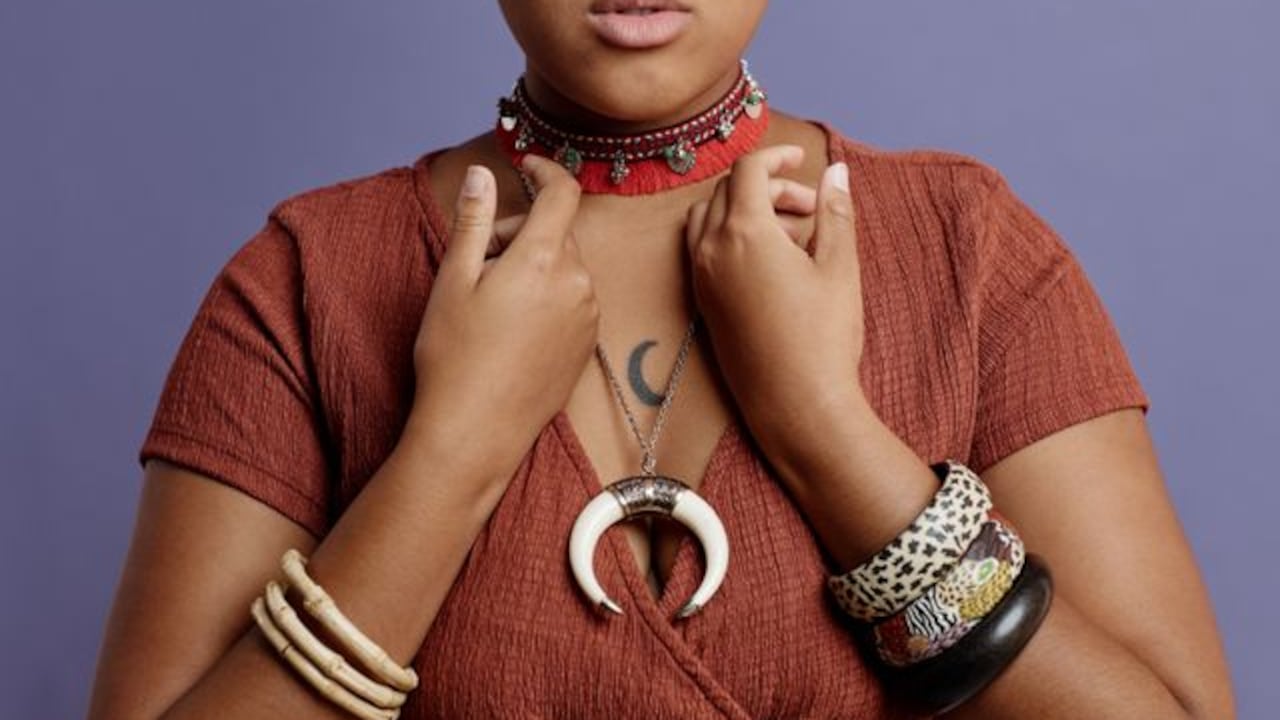
Match the necklace length to your neckline
Photo Credit: Pexels
6. Check Whether The Clasp Is Pulling The Necklace Backwards
The clasp looks tiny, but its weight can influence the entire necklace.
Some chains pair a lightweight pendant with a comparatively bulky lobster clasp, extender chain or decorative tag at the back. Over time, that extra weight can pull downwards behind the neck. As the clasp moves, the front section shifts too.
This explains the irritating phenomenon where the clasp suddenly appears beside the pendant even though the necklace started perfectly centred.
Extender chains can make the problem more noticeable. Several centimetres of unused extender hanging at the back add weight without contributing much to the appearance of the necklace.
If the same piece constantly rotates, try fastening it at a different point on the extender so less loose chain hangs behind. For necklaces worn frequently at one length, removing unnecessary extender links may also help.
A necklace works as a complete system. The pretty pendant gets most of the attention, but balance at the back matters almost as much as balance at the front.
7. Notice Whether Hair Or Clothing Is Dragging The Chain
Sometimes the necklace isn't moving on its own. Something else keeps taking it along for the ride.
Long hair can repeatedly brush against delicate chains, particularly around the sides and back of the neck. Each turn of the head creates a tiny amount of friction. Over an hour or two, those movements can shift a clasp surprisingly far.
Scarves, dupattas, jacket collars and structured shirt collars can have a similar effect. Even a handbag strap crossing close to the neckline can pull one side of a longer chain.
Before blaming an uneven pendant, pay attention to what touches the necklace during the day. A piece that stays centred at home but twists during a commute may simply be reacting to layers, bags or hair.
Tucking hair behind the shoulders, moving a bag strap slightly outward or choosing a different necklace length can sometimes solve the problem instantly.
Jewellery styling isn't only about matching colours and outfits. It also involves giving a necklace enough physical space to move without constantly colliding with everything around it.
8. Look At How Layered Necklaces Are Competing For Space
Layered necklaces look effortless in photographs. In real life, they often behave like siblings sharing the back seat.
Two chains with similar lengths can rub, cross and tug at each other throughout the day. Once one chain moves sideways, it can drag the second one along. Pendants may overlap, clasps may migrate and delicate chains can twist together.
Spacing makes layering considerably easier. Instead of choosing several necklaces that differ by only a centimetre or two, create clear gaps between them. Let each pendant occupy its own section of the neckline.
Chain texture also matters. Pairing two very similar delicate chains can increase tangling because they sit so closely together. Mixing slightly different weights or styles may help them remain visually and physically separate.
Necklace separators and layering clasps can also keep chains organised at the back, particularly when three or more pieces are involved.
Layering should look relaxed, not require a bathroom-mirror rescue mission every forty minutes. A little more distance between pieces can make the whole arrangement far easier to wear.
9. Pay Attention To Posture And Repeated Daily Movements
A necklace reacts to the body beneath it, which means everyday habits matter.
Spending hours looking slightly down at a laptop or phone changes the angle between the neck and chest. Turning repeatedly towards one side while working can also encourage a delicate chain to shift in that direction.
The same applies to carrying a handbag on one shoulder. One shoulder may naturally lift to keep the strap in place, subtly changing how the necklace rests across the collarbones.
This doesn't mean maintaining statue-like posture for the sake of jewellery. The goal is simply to identify patterns. If a necklace consistently moves towards the same side, notice whether a bag, desk setup, hairstyle or habitual movement corresponds with that direction.
Longer necklaces can sometimes cope better with frequent upper-body movement because they have more space to hang freely. Shorter pieces may benefit from sitting snugly enough that they don't travel easily.
A necklace that shifts predictably is offering a clue. Watch when the movement happens, and the cause often becomes much easier to spot.
10. Test The Necklace Before Building An Outfit Around It
The easiest time to discover that a necklace twists constantly is before leaving home, not halfway through an event.
Put the necklace on and give it a miniature version of an ordinary day. Walk around. Sit down. Bend to pick something up. Turn the head. Put on the intended outer layer and carry the bag that will accompany the outfit.
Then check the necklace.
If the pendant has already rotated or the clasp has travelled towards the front, something needs adjusting. Change the chain length, remove an unnecessary extender, swap the necklace or reconsider where it sits against the neckline.
This small test becomes especially useful with jewellery reserved for weddings, parties or festive outfits. Elaborate necklines, embroidery and heavier fabrics can affect a necklace very differently from the simple top worn while getting ready.
Jewellery should complement an outfit rather than become another thing to manage. Five minutes of movement testing can save several hours of discreetly reaching for the clasp and wondering how it got there again.
Products Related To This Article
1. Anouk Brass Gold-Plated Layered Necklace
2. Rubans 18K Gold plated Crystal Studded Stunning layered Y Necklace
3. SOHI Gold-Plated Pearl Beaded Layered Necklace
4. SOHI Gold-Plated Circular Drop Necklace
5. Zaveri Pearls White & Gold-Plated Layered Necklace
6. I Jewels Men Traditional Multi-Layer Pearl Necklace Mala
7. Jewelocity Brass Gold-Plated Necklace
A necklace that keeps twisting usually isn't misbehaving for no reason. Chain length, pendant weight, clasp balance, clothing and everyday movement all influence where it eventually settles. Instead of constantly pulling the pendant back into place, look for the source of the imbalance. Often, a small change in length, pairing or positioning is enough to help a favourite necklace finally stay where it was meant to.
(Disclaimer: This article may include references to or features of products and services made available through affiliate marketing campaigns. NDTV Convergence Limited (“NDTV”) strives to maintain editorial independence while participating in such campaigns. NDTV does not assume responsibility for the performance or claims of any featured products or services.)